

Improve your gut health with probiotic fermented onions
Did you know that digestion is the foundation of a healthy life, and that our physical health and even our mental health depend on it? Many diseases have been associated with the deterioration and imbalance (dysbiosis) of the gut microbiota. One of the main roles of probiotics is to restore the balance of the intestinal flora, which results in:
- Better digestion of food.
- Less gas, heartburn, and indigestion.
- A stronger immune system.
- Less inflammation.
- Reduced constipation.
- Fewer food allergies.
- Prevention of digestive diseases and colon cancer.
- Protects your cardiovascular health.
- Improved mood and, ultimately, greater happiness.
- General well-being.

The human intestine is a vast, complex ecosystem where the microbiota, nutrients, and host cells interact extensively. Various bacterial communities that make up the gut microbiota live in our intestines and perform many functions, including metabolic, barrier, and trophic functions.
Microbiologist and Nobel Prize winner Elie Metchnikoff said that most diseases begin in the digestive tract. According to this scientist, this happens when “good” bacteria are unable to control the “bad” ones. This is where good bacteria—probiotics—come into play.
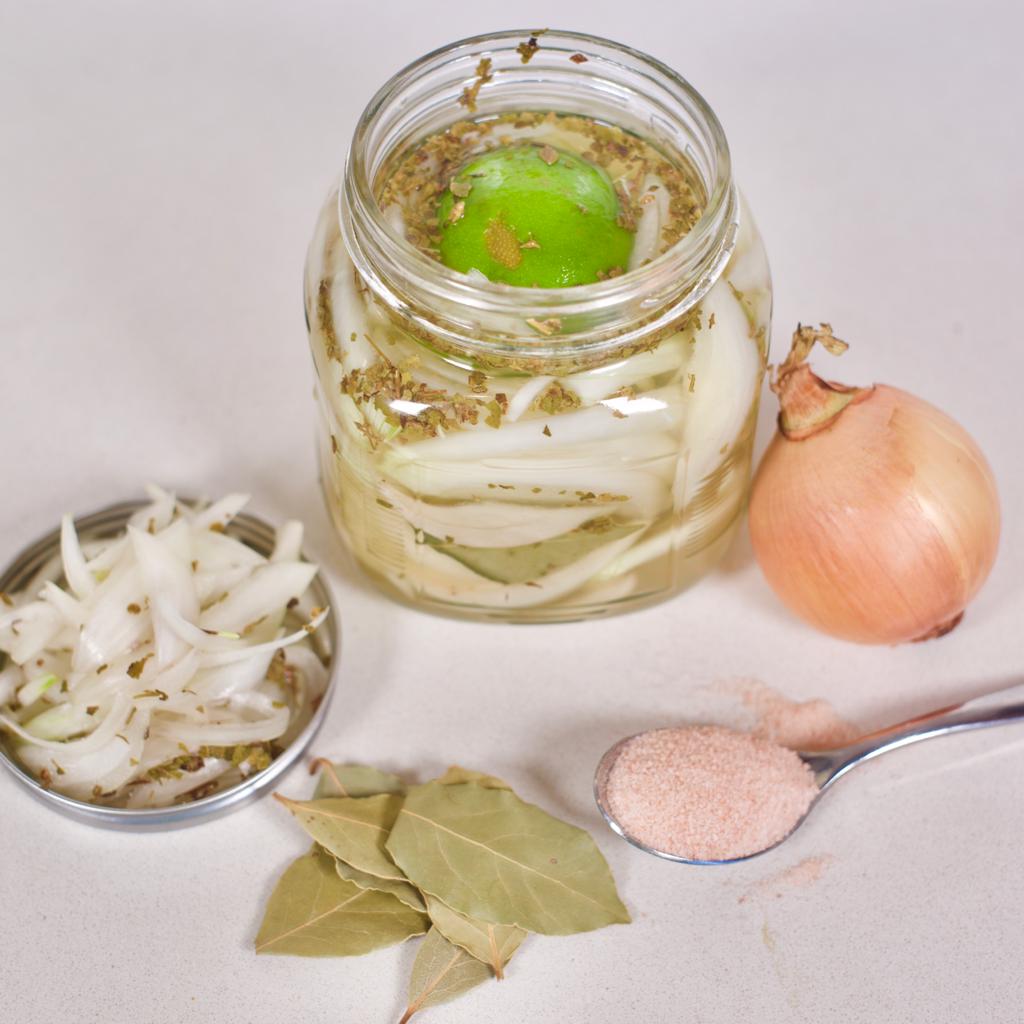
 Probiotic fermented onions
All fermented vegetables provide your body with countless benefits, too many to list right now. However, the most important one is that if you consume probiotics every day, you’ll be adding soldiers to your immune system to protect you from harmful agents that could make you sick and damage your body.
In addition, fermenting a vegetable increases its vitamin C content and properties by 1,000%. In this case, I fermented onions, which are an incredible antibiotic and antiviral.
Fermentation is an ancient process used to preserve food and improve its flavor and nutritional value. It is believed that fermentation was discovered by accident when food was left in warm, humid conditions for a long time and began to change in flavor and texture.

Records of fermentation have been found in Egyptian culture, where it was used to make beer and bread, as well as in Chinese culture, where foods such as soy sauce and kimchi were fermented. Evidence of fermentation has also been found in Ancient Greece and Rome, where it was used to make wine and cheese. Did you know that? Several of the foods we all know best are made through a fermentation process!
Now, let’s get to the recipe for these delicious fermented onions.

Ingredients:
- 2 large onions, thinly sliced.
- 2 bay leaves.
- 1 small handful of whole oregano.
- 1 cup filtered water.
- 1 tablespoon sea salt or Himalayan salt.
- 1 glass jar with a lid, previously boiled.
Instructions:
Dissolve the tablespoon of salt in the cup of water and stir well until the salt crystals have dissolved. This will give you the brine.
In a glass bowl, mix the onions with the bay leaves and oregano.
Next, place the onions in the sterilized jar and fill it with the brine. Make sure all the vegetables are submerged. You can place a weight on top; I used a whole lemon, but you can use a cabbage leaf, for example. The purpose of the weight is simply to push all the onions down and keep out the air.
It is important that all fermented vegetables stay submerged and away from oxygen, since this is an anaerobic fermentation.
Put it in a dark place for 5 days. Place it inside a container, as liquids may spill out during fermentation.

How do you eat them?
Eat them every day: a teaspoon of the vegetables with a little of their own liquid. Or you can eat as much as you like.
You can add these delicious onions to dishes such as sandwiches and salads, or simply eat them on their own as a side dish.
It is very important not to cook them. When we heat a probiotic, we are literally killing the good bacteria that provide all the benefits I mentioned earlier.
I hope you make them and enjoy them.
Complete reset of your digestive system
If you’d like to detox and cleanse your digestive system, I’d like to offer you my 28-Day Detox Plan, a plan designed to reset your digestive system and, consequently, all your body’s systems in 28 days. You’ll receive a digital plan with each of your meals for 4 weeks, and you’ll also get direct support from me and my team via WhatsApp.

Here are the benefits you’ll enjoy:
- We’ll reset stomach acidity.
- We’ll balance your pH.
- We’ll cleanse the liver, which may contain crystals formed from old bile that gradually crystallizes and forms stones (even if they aren’t visible).
- We’ll cleanse the colon and seal any leaks. Foods alone do not cause allergies; the problem is intestinal permeability.
- We’ll cleanse heavy metals.
- We’ll get rid of parasites. You may have parasites without knowing it; they are much more common than you think and very, very harmful to your health.
Have questions? Contact us on WhatsApp at +1 (786) 669-9045 and we’ll provide personalized assistance. Click here to send us a message.


Written by Jessica Wellness

Leave a comment
This site is protected by hCaptcha and the hCaptcha Privacy Policy and Terms of Service apply.