

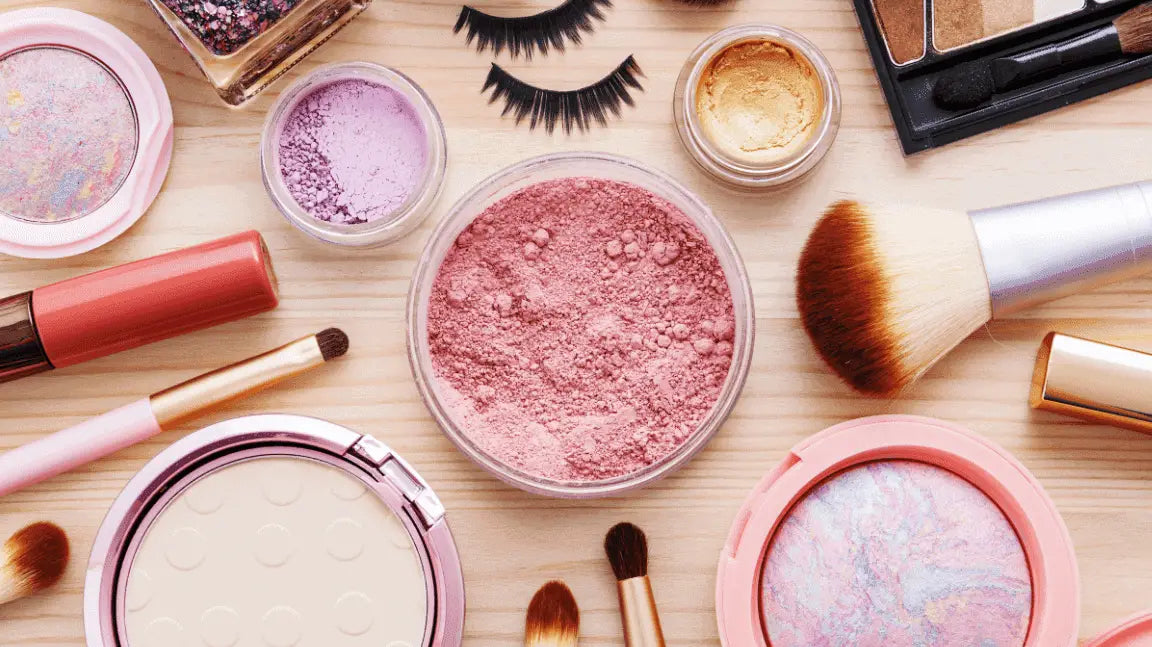
WARNING: the chemicals present in cosmetics
The constant search for cosmetics is common practice in contemporary society, driven by the pursuit of beauty and personal care. However, this trend goes beyond aesthetics, as there is growing concern about the quality and safety of the products people use on their skin and bodies. The lack of clear regulation in the cosmetics industry, together with the presence of potentially harmful chemicals, raises growing concerns about possible adverse health effects.
Choosing products that do not contain harmful ingredients has become a real challenge, since it can be difficult for anyone to identify toxic substances and compounds.
Toxic chemicals in cosmetics and personal care products remain in our bodies and environments for a very, very long time. It’s important to stay informed!

The presence of PFAS
Many of these chemicals are PFAS, also known as "forever chemicals." They are used in cosmetics because of their properties, such as water repellency and film-forming ability, which improve a product’s durability and spreadability. Other benefits include greater product absorption by the skin and improvements in the skin’s appearance or texture.
PFAS in cosmetics may pose a risk to human health through direct and indirect exposure, as well as a risk to the health of ecosystems throughout these products’ life cycles.
They have been widely used in industrial products such as firefighting foams and consumer products such as coated fabrics, carpets, cookware, and other food packaging, among many others. In other words, they’re everywhere.
They accumulate in the environment and the human body because they lack natural degradation mechanisms.
They are found around the world, even in remote regions such as the Arctic.
In this blog, we’ll focus specifically on concerns about these substances in the cosmetic products around us.

Studies conducted
Self-tanners, concealers, foundations, shaving creams, sunscreens, and moisturizers. These are just some of the many everyday cosmetics being scrutinized in numerous studies and investigations.
In a survey conducted in Canada by the Canadian Health Measures Survey, where blood samples were taken from thousands of people, researchers found several types of PFAS in every participant.
That is why a study conducted in the US evaluated PFAS in cosmetics and personal care products. Researchers identified high levels of these substances; despite government bans on certain PFAS, they found products containing them at levels one thousand times higher than the amount permitted as an incidental contaminant.
This was confirmed in an investigation in which perfluorooctanoic acid (PFOA) was deliberately added to sunscreen to determine how much was absorbed through the skin. After using the sunscreen every day for three weeks, the PFOA in the sunscreen accounted for approximately 10% of the total PFOA in the body.
This means that if you regularly use sunscreen containing PFAS, along with other PFAS-containing products such as cosmetics and personal care products, you could have high levels of these substances in your body.
Additionally, another study conducted in the United States found higher PFAS levels in the blood of women who regularly used foundation makeup.
There is a great deal of research on these substances. In another study conducted in both the US and Canada, total fluorine concentrations were quickly detected in 231 of their cosmetic products purchased from retail stores in these countries, including lip products, eye products, foundations, facial products, mascaras, concealers, and eyebrow products.

This finding suggests a lack of oversight in the regulation of PFAS in the personal care products industry. In addition to using cosmetics, we can also absorb these substances by drinking contaminated water or eating foods such as fish or meat. Agricultural fields may contain PFAS from biosolids used as fertilizers, since wastewater treatment plants cannot remove them.
But why is this so concerning?
Because they persist in our bodies, which can cause long-term adverse health effects, and PFAS levels in the body are linked to the regular use of cosmetic products.
A study conducted in Korea linked the use of cosmetics and personal care products to higher PFAS levels in breast milk.
Even exposure to low amounts of PFAS can build up in the body over time. The half-life of PFOA in humans is about two years. Even after that point, half the amount of PFOA remains, and it takes many more years for it to be eliminated. Concerning, isn’t it?
The risks they pose to your health
Absorption of PFAS (per- and polyfluoroalkyl substances) poses various health risks:
- Liver damage
- Kidney problems
- Hormonal changes
- Immune system suppression
- Increased cancer risk
- Effects on fetal development

A study conducted in Korea linked the use of cosmetics and personal care products to higher PFAS levels in breast milk.
The most common names you may find in your cosmetics:
- Conditioning agents: Behentrimonium, cetrimonium chloride, and other quaternary ammonium compounds may contain trace amounts of PFAS.
- Emollients: Mineral oil, petrolatum, and other petroleum derivatives may contain PFAS in some cases.
- Preservatives: Methylparaben, ethylparaben, and other parabens, which are used in cosmetics to prevent the growth of bacteria and fungi, may contain trace amounts of PFAS.
- Pigments and colorants: Titanium dioxide and other pigments used in makeup and skin care products may contain PFAS in some cases.
- Perfumes and fragrances: Ingredients used to add fragrance to cosmetic products may sometimes contain PFAS.
- Silicones: Dimethicone, cyclopentasiloxane, and other silicone derivatives may contain trace amounts of PFAS.
- Fluorosurfactants: Used as surfactants, they may contain PFAS to provide water-repellent or nonstick properties.

This concern points to the need for greater transparency from manufacturers and stricter regulation by authorities to ensure that cosmetics are safe and healthy for everyday use.
In this context, we must educate consumers and promote awareness about choosing safe products. This is essential to protecting the health and well-being of our society. People should know what they put on their skin and what consequences it may have.


Leave a comment
This site is protected by hCaptcha and the hCaptcha Privacy Policy and Terms of Service apply.