

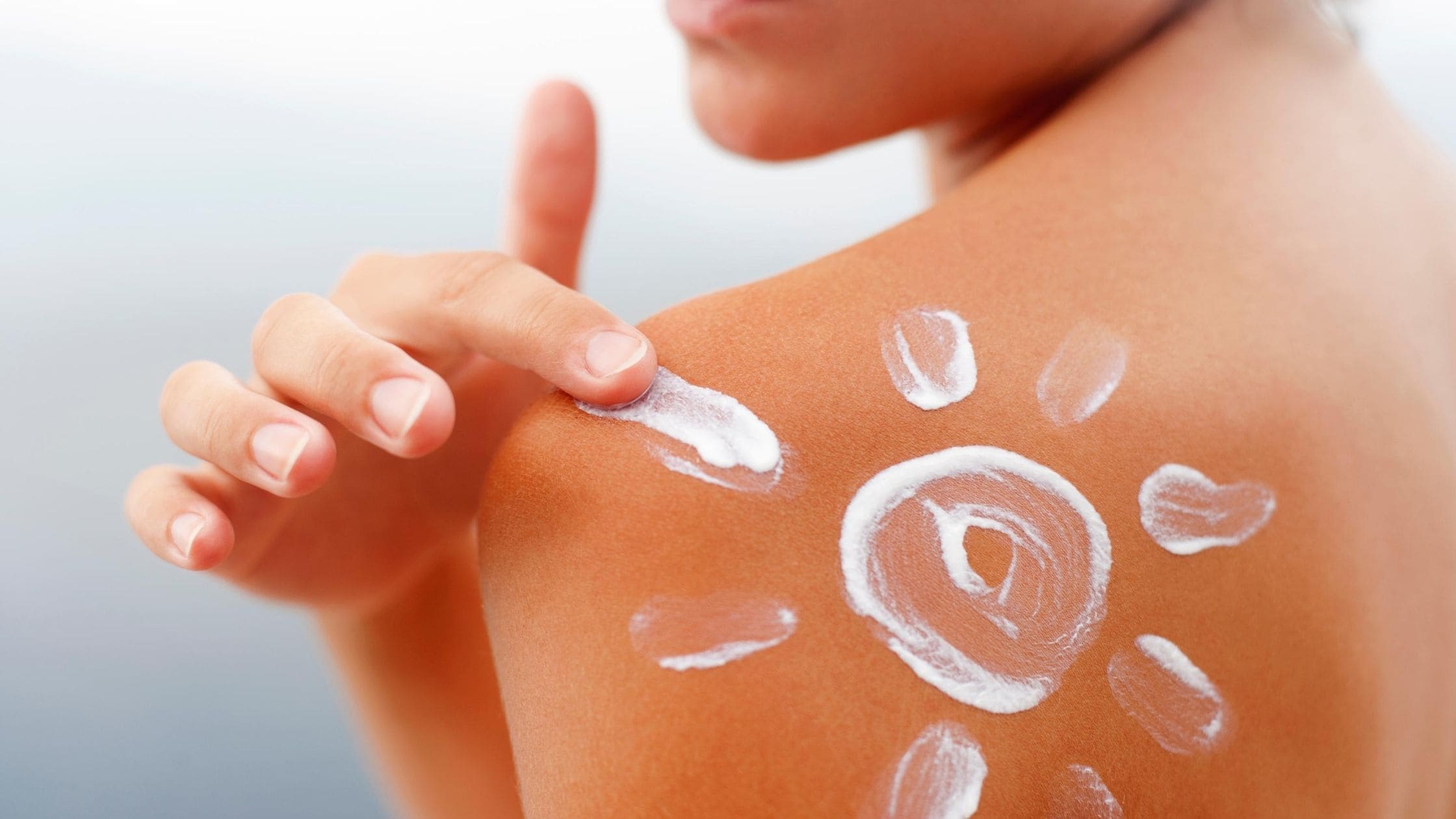
Sunscreen and Your Hormones
Which is more dangerous... the sun or sunscreen?

First of all, I have to admit that for many years I made the same mistake you may be making right now.
My only intention is for you to find out too and be free to make your own decisions.
It’s no secret that the sun (in moderate doses) provides all kinds of health benefits, including helping our bodies produce vital vitamin D. However, with the sun so strong, and especially in an effort to protect against wrinkles and photoaging, many people look for the best sunscreens to reduce the risk of overexposure to the sun, sunburn, and possibly skin cancer.

The Environmental Working Group’s 15th annual sunscreen guide contains both good and bad news about the state of sunscreens sold in the United States and beyond. For example, oxybenzone, a chemical suspected of disrupting hormones and easily absorbed by the body, is now present in 40% of the 1,800 products investigated by the EWG. While that may seem high, consider that two years ago, around 60% of sunscreens contained this concerning chemical, meaning that the laboratories themselves have reduced its use. Why? These are questions we should ask ourselves and reflect on so we can take responsibility for what is truly good for our health.

In December, the National Toxicology Program published findings that link exposure to oxybenzone with an increased risk of thyroid tumors in female rats. And in late March, the European Commission, which reviews the safety of ingredients in Europe, published a final opinion finding oxybenzone unsafe for use at current levels. This applies in Europe, while it continues to be used in the United States and Latin America.
The problem is that, unfortunately, most laboratories use ingredients that either have not been sufficiently tested before being approved for human use, have not been tested at all, or have been tested and approved for use only in limited quantities. In my personal opinion, this is neither ethical nor right, because our health is not a game.

Sunscreen chemicals build up in the blood
The effects of sunscreen can also last longer than expected. A 2020 FDA-led study found that "sunscreen chemical ingredients are systemically absorbed after one application, and some ingredients can remain in the blood for at least three weeks."
The sunscreen chemicals tested included:
- Avobenzone.
- Oxybenzone.
- Octocrylene.
- Homosalate.
- Octisalate.
- Octinoxate.
All six active ingredients tested are readily absorbed into the human bloodstream in the study, at concentrations exceeding an important FDA safety threshold.
This builds on previous research showing that sunscreen chemicals enter the bloodstream within a day of use, at levels high enough to prompt a government safety investigation.
“We slather these ingredients on our skin, but these chemicals have not been adequately tested,” says Nneka Leiba, vice president of Healthy Living Science at the EWG. "This is just one example of the backward nature of product regulation in the U.S."
“The sunscreen market is flooded with products that use potentially harmful ingredients and provide inadequate protection against UVA rays.”

What’s the solution?
Always choose a simple sunscreen in today’s cosmetics market. Less is more—in other words, focus on options with natural, minimalist ingredients.
Make sure the sunscreen’s active ingredient is non-nano Zinc Oxide (this detail is very important) or Titanium Dioxide.

Unlike chemical-filter sunscreens, physical-filter sunscreens are not absorbed by your skin. They act as a protective barrier that can absorb UV radiation; their main mechanism of action is to reflect radiation, acting like mirrors. They are not absorbed, but remain on the skin’s surface, making them well tolerated by sensitive skin. In addition, since they are mineral components found in nature, they are environmentally friendly and do not negatively affect the environment.
Sunny or Cloudy ™ SPF 30 Mineral is our new physical-filter sunscreen made with Zinc Oxide (Non-Nano) for broad-spectrum protection against UVA and UVB rays. Suitable for all skin types, including sensitive skin. It gives you a radiant, natural finish thanks to its rich pigments derived from iron oxide, which not only add a beautiful color to your face but also act as a nutrient and are good for our health, unlike other pigments used in natural cosmetics that come from harmful chemical compounds.

The only sunscreen with Astaxanthin
Its innovative formula contains Astaxanthin, a relatively recently discovered carotenoid that, thanks to its antioxidant power, is believed to be the most potent one nature has to offer. It is a super nutrient that, when applied topically to the skin, forms a protective shield against radiation, and our sunscreen—in all three versions—is the first to include it in its formula.
It harmoniously combines a perfect balance of oil-soluble and water-soluble lipids that give the skin a hydrated appearance without a greasy finish, such as Raspberry Seed Oil and Karanja Oil—the only oils with natural sun protection, according to the latest studies.

Sunny or Cloudy ™ SPF is available in our store in Clear (untinted), Light/Medium, and Medium Dark versions. To order it, click here.
Additional recommendations:
- Avoid sun exposure during the strongest hours, and if you can’t avoid it, wear a hat, sunglasses, use an umbrella, etc. The idea is to enjoy life without restrictions, but safely.
- Sunbathe daily when your shadow is long—that is, early in the morning or late in the afternoon. Remember that the sun is life and a great ally for health, as our production of Vitamin D3 depends on it. Vitamin D3 is a hormone synthesized by our own bodies that plays a major role in overall health.
Wishing you health and beauty, now and always. Sending you love!
With much love, Jessica @jessicawellness
Sources
https://draxe.com/beauty/best-sunscreens/
https://www.ewg.org/sunscreen/
https://jamanetwork.com/journals/jama/article-abstract/2759002

Written by jessica wellness

Leave a comment
This site is protected by hCaptcha and the hCaptcha Privacy Policy and Terms of Service apply.